BEYONDISM — Africa of Today & Tomorrow
AFRICA OF TODAY AND TOMORROW does not require a REVOLUTION in the traditional (political) sense of the term, but simply AWAKENING. Towards this end, where do we source our raw materials? Does our African academic Arsenal have enough intellectual Weapons to come to our aid?
It becomes evident that our ancient dependence on European or American thought is lessening, that we are beginning to do our own work in philosophy, psychology, literature and science, and in our own way. Merely beginning, of course: for we are still young, and we have not yet learned to walk entirely without the assistance of our colonial masters, or other foreign powers. We may find it hard to surpass ourselves, and are sometimes discouraged with our own superficiality, our provincialism, our narrowness and our bigotry, our immature intolerance and our timid violence against innovation and experiment.
However, let us remember that England needed eight hundred years between her foundation and her Shakespeare (1564–1616). Let us also comprehend that France needed eight hundred years between her foundation and her Montaigne (1533–92). We take the late fifties and early sixties as the factual foundation for most of African countries. With BEYONDISM taking the bull of RETROGRESSION by its horns, what was achieved in Europe in more than eight centuries, we intend to astronomically accomplish in a short span of less than one DECADE!
Wherever you find us quoting non-AFRICAN writers, thinkers and personality examples (in business and in real LIFE), this is not being unpatriotic, or assuming that nothing good can be reaped from African academic fields. This is first borne of the most insightful comment by political scientists: Development is Teleological (follows a certain progressive path). This means that the more developed countries gives us the image of our future.
Concerned as we are about intellectual aridness ailing some of our purported scholars, the second reason is a result of the meager information and research data in our African Universities — an apparently difficult, but very possible task (of reversing this situation) which BEYONDISM seeks to undertake in the near future.
BEYONDISM attempts to mitigate the malady of our TIMES in the name of abstract academism; the solemn reduplication of accepted masters. We must abandon that sweet sense of accomplishment which comes from parading habitual skills. We should address ourselves to problems sufficiently unclarified, as to make discovery possible. Our formidable focus is not simply to unravel the paradox of human nature, but also to match — or even surpass — the efforts and achievements of the former intellectual Titans.
No soon than later, BEYONDISM will have done its assignment of exposing you to important writers, poets, philosophers, psychologists, historians, researchers and other scholars. If you wish to be a Blessed Beyondist (BB) — The Anointed One (TAO) — worth the salt, go further and look for their complete, original works.
In the aridness, narrowness and parochialism which LIFE may tend to constrict you, a sincere strive to affirmatively achieve SELF-ACTUALIZATION should drive you in the direction of making friends of these past and present geniuses. For a few coins you can buy their counsel and listen familiarly to their speech and by learning from them, mould yourself in the clear air which runs about them. Opening yourself to the slow influence of books, is what American historian and philosopher Will Durant (1885–1981) likened to “a flowing water curving out a canyon”.
In the companion of these sages and heroes, watching a sunrise with Epicurus, sitting at the breakfast table with Byron, walking barefooted in your garden with Tennyson, being accompanied on a journey by Adler, lying on a coach together with Sartre, enjoying a sunset with Emmerson or serenely waiting for your supper with Toynbee, you will not escape being lifted up a notch or two by their refreshing enrichment, to a higher level of ‘REALIZATION’.
The inerrant intent of BEYONDISM!
BEYONDISM amorously acknowledges that the concise contributions of various thinkers like the illumining Socrates, giant Hegel, lucid Montaigne, prodigious Freud, divine Spinoza, marvelous Erikson and incisive Maslow among others, may seem to dominate our discourse to the point of parochialising it. In our context here, these ideas ARE inevitable starting-points for any useful intellectual breakthrough. But they are starting-points only. To move BEYOND them, we must place them in a much broader context of contemporary thought than they, in and of themselves, encompass. The dangers of such a procedure are obvious: arbitrary eclecticism, superficial theory-mongering, and sheer intellectual confusion. But at least, there is perhaps no other road of escape from this physically dead (but spiritually immortal) hand of competence. To be precise, this is the only ameliorating assignment of the 21st century intellectual inquiry. Throughout this WEBSITE, we shall seek in the past and present thinkers (the master minds of history) not shrivelled abstractness and formality, but be enlightened by their living form of genius. We shall spend our time with the saints and martyrs of thought, letting their radiant spirit play about us until perhaps we too, in some measure, shall partake of the noblest pleasure, the joy of understanding. Credit here is apparently accorded (without watering-down the role played by other scholars and researchers) to SEVEN INDOMITABLE INSPIRERS.
1. Aristotle (384 – 322 BC)
T
his Greek philosopher and scientist, shares with Plato and Socrates the distinction of being the most famous of ancient philosophers. The influence of Aristotle’s philosophy has been pervasive; it has even helped to shape modern language and common sense. His doctrine of the Prime Mover as final cause played an important role in theology. Until the 20th century, logic meant Aristotle’s logic. Until the Renaissance, and even later, astronomers and poets alike admired his concept of the universe. Zoology rested on Aristotle’s work until British scientist Charles Darwin modified the doctrine of the changelessness of species in the 19th century. In the 20th century a new appreciation has developed of Aristotle’s method and its relevance to education, literary criticism, the analysis of human action, and political analysis. Not only the discipline of zoology, but also the world of learning as a whole, seems to amply justify Darwin’s remark that the intellectual heroes of his own time “were mere schoolboys compared to old Aristotle.”
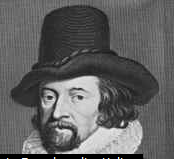
2. Francis Bacon (1561 – 1626)
W
idely considered the most influential and versatile English writer of the 17th century, Sir Francis Bacon addressed a broad range of topics in his works, including ethics, philosophy, science, law, and history. He also enjoyed a long political career. Bacon’s philosophy emphasized the belief that people are the servants and interpreters of nature, that truth is not derived from authority, and that knowledge is the fruit of experience. Bacon is generally credited with having contributed to logic the method known as ampliative inference, a technique of inductive reasoning. Previous logicians had practiced induction by simple enumeration, that is, drawing general conclusions from particular data. Bacon’s method was to infer by use of analogy, from the characteristics or properties of the larger group to which that datum belonged, leaving to later experience the correction of evident errors. Because it added significantly to the improvement of scientific hypotheses, this method was a fundamental advancement of the scientific method.
3. William Shakespeare (1564 – 1616)
E
nglish playwright, poet and actor, Shakespeare is recognized in much of the world as the greatest of all dramatists. He had a profound understanding of human nature and human behavior, and he was able to communicate this knowledge through the wide variety of characters he created in his plays. He is known for producing perhaps the most varied and powerful body of work any author has ever written, exploring elemental themes of power, justice, love, and death in his tragedies, comedies, histories, romances, and sonnets (amounting to 38). By creating realistic stage characters whose appeal comes in their truly human motives, actions, and flaws, Shakespeare achieved widespread and lasting recognition for his work, which continues to be taught and performed worldwide. Adding innumerable phrases and quotations to the English language, he is the most widely quoted author in history, and his plays have probably been performed more times than those of any other dramatist.
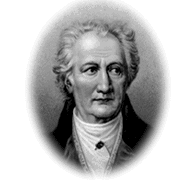
4. Johann Wolfgang von Goethe (1749 – 1832)
A
seminal figure in German literature, German poet, dramatist, novelist, and scientist Goethe served as the foremost representative of the German romantic movement. Goethe wrote poems, plays, and novels from the late 1700s to the early 1800s. Goethe’s poetry expresses a modern view of humanity’s relationship to nature, history, and society; his plays and novels reflect a profound understanding of human individuality (an emphasis on one’s right and power to inquire freely into affairs both human and divine, and to work out one’s own destiny). Goethe’s importance can be judged by the influence of his critical writings, his vast correspondence, and his poetry, dramas, and novels upon the writers of his own time and upon the literary movements which he inaugurated and of which he was the chief figure. According to the 19th-century English critic Matthew Arnold, Goethe must be considered not only “the manifest center of German literature” but one of the most versatile figures in all world literature.
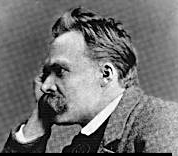
5. Friedrich Wilhelm Nietzsche (1844 – 1900)
O
ne of the most provocative and influential thinkers of the 19th century is German philosopher, poet, and classical philologist, Nietzsche, who maintained that all human behavior is motivated by the will to power. In its positive sense, the will to power is not simply power over others, but the power over oneself that is necessary for creativity. Such power is manifested in the overman’s independence, creativity, and originality. According to Nietzsche an overman is a strong person who is liberated from all values, except those that one deems valid. Although Nietzsche explicitly denied that any overmen had yet arisen, he mentions several individuals who could serve as models. Among these models he lists Jesus, Greek philosopher Socrates, Florentine thinker Leonardo da Vinci, Italian artist Michelangelo, English playwright William Shakespeare, German author Johann Wolfgang von Goethe, Roman ruler Julius Caesar, and French emperor Napoleon I.
6. Carl Gustav Jung (1875 – 1961)
J
ung, a Swiss psychiatrist began his studies of human motivation in the early 1900s and created the school of psychoanalysis known as analytical psychology. A contemporary of Austrian psychoanalyst Sigmund Freud, Jung at first collaborated closely with Freud but eventually moved on to pursue his own theories, including the exploration of personality types. According to Jung, there are two basic personality types, extroverted and introverted, which alternate equally in the completely normal individual. Jung also believed that the unconscious mind is formed by the personal unconscious (the repressed feelings and thoughts developed during an individual’s life) and the collective unconscious (those inherited feelings, thoughts, and memories shared by all humanity). By understanding how the personal unconscious integrates with the collective unconscious, a patient can achieve a state of individuation, or wholeness of self. He wrote voluminously, on the relationships between psychotherapy and religious belief.
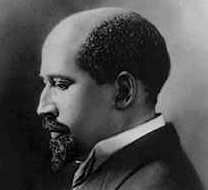
7. W. E. B. Du Bois (1868 – 1963)
I
n 1895 American writer W. E. B. Du Bois became the first black to be awarded a doctoral degree from Harvard University in Cambridge, Massachusetts. In 1896 he published his doctoral dissertation, The Suppression of the African Slave-Trade to the United States of America, 1638–1870, as the first volume in the Harvard Historical Studies Series. Du Bois is a historian and a sociologist, whose work paved the way for the civil rights, Pan-African, and Black Power movements in the United States. He helped organize several pan-African meetings and attended seven between 1900 and 1945. Du Bois joined the Communist Party when he was 93 years old. The United States government accused Du Bois of being an agent of the U.S.S.R., and in 1951 brought him to trial; he was acquitted. In 1961 he moved to Ghana, West Africa, where he became a citizen in 1963; began work on the Encyclopedia Africana, a reference work on the experiences of Africans throughout the world.
Together these thinkers emphasize three core Beyondist themes:
Awaken Wisdom • BEYONDISM • African Renaissance
Here are seven quotes from each thinker that resonate with the spirit of self-actualization, transcendence, cultural awakening, and human flourishing—themes that align well with BEYONDISM and the African Renaissance.
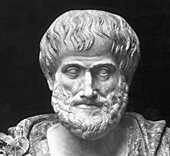
Aristotle emphasizes virtue, disciplined excellence, and purposeful living, foundational elements of self-actualization and civilizational renewal.
Bacon represents intellectual awakening, scientific courage, and the pursuit of knowledge, central to Renaissance thinking.
Shakespeare speaks powerfully about human potential, responsibility, and inner greatness.
Goethe’s thought celebrates creative self-realization and the awakening of human potential.
Nietzsche champions self-overcoming, courage, and transcendence, essential elements of Beyondist philosophy.
Jung speaks directly to inner awakening, psychological integration, and individuation, pillars of self-actualization.
Du Bois connects education, dignity, and intellectual liberation to the awakening of oppressed peoples, which strongly aligns with the African Renaissance.